
Theodore Roosevelt Presidential Library: Automating a 9,200-Pound Pocket Door

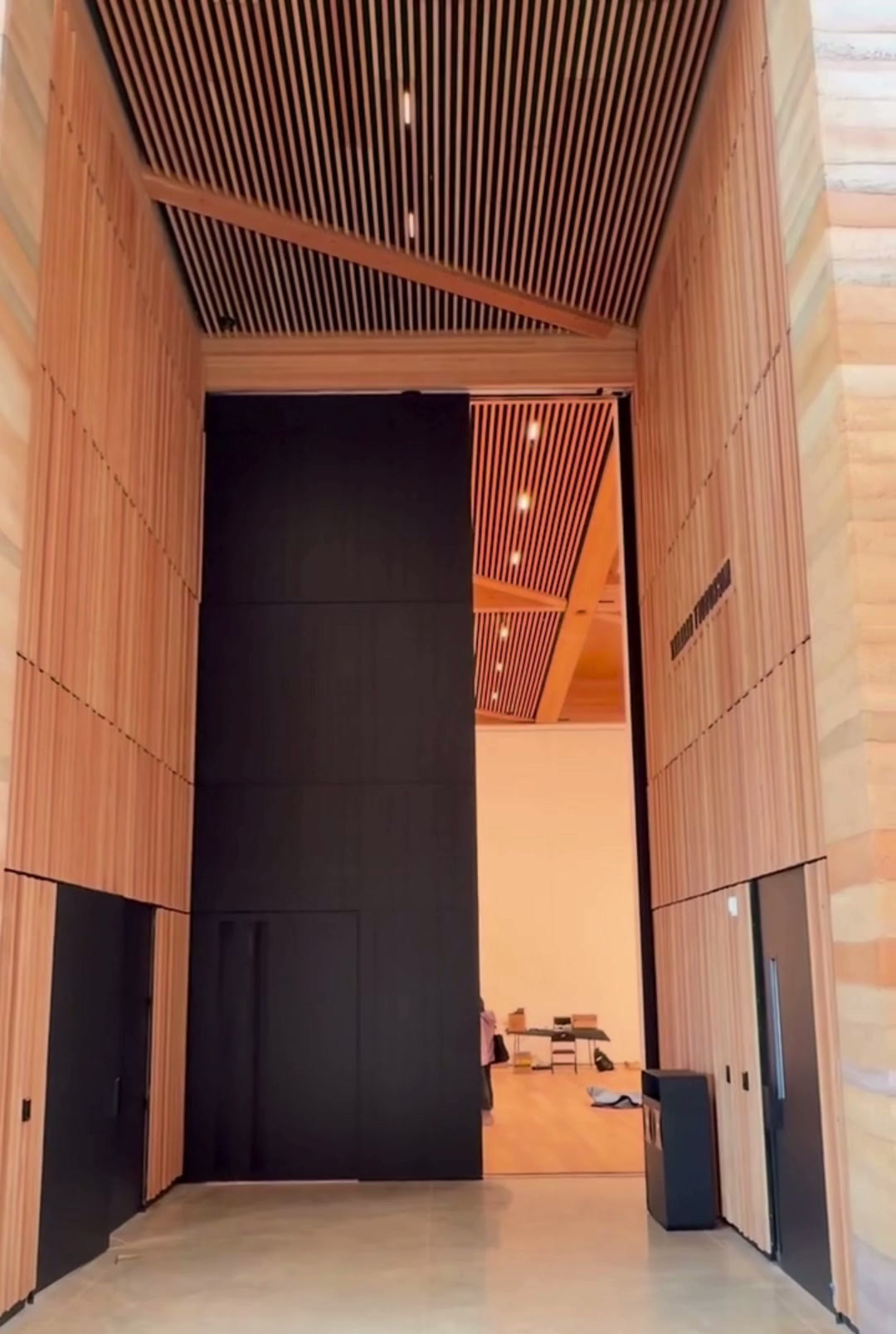
At the Theodore Roosevelt Presidential Library in Medora, North Dakota, four massive automated pocket doors allow the main lobby and adjacent exhibit areas to function as separate spaces or open into one another. The largest door spans an opening 25 feet tall by 14 feet wide and weighs 9,200 pounds.
Automating doors at this scale required coordination among the fabricator, installer and automation team, with the weight, installation method and emergency egress requirements all influencing the design.
Door Automation Systems (DAS) provided the automation for all four doors, including its Everest motor and a heavy-duty clutch for the largest panel.
The project at a glance
Project: Theodore Roosevelt Presidential Library, Medora, North Dakota
Opened: July 4, 2026
Design architect: Snøhetta
Architect of record: JLG Architects
Construction manager: JE Dunn
Door fabrication: North Star Millworks
Fabrication, installation and automation coordination: Millworks by Design
Automation: Door Automation Systems (DAS)
Doors: Four automated pocketing doors
Largest door: 25-foot-tall by 14-foot-wide opening, 9,200 pounds
Motor: DAS Everest motor with a heavy-duty clutch
Large-scale doors for a monumental building
Designed by Snøhetta, the Theodore Roosevelt Presidential Library opened on July 4, 2026, on a butte overlooking the North Dakota Badlands. The building's planted roof rises from the surrounding landscape, while the interior includes expansive exhibit areas, a 300-seat auditorium and a sweeping rammed-earth wall in the main hall.

Within this setting, four large pocketing doors provide flexibility between the main lobby, adjacent exhibit areas and coat check.
When closed, the doors blend into the surrounding walls, allowing the spaces to be separated without interrupting the interior's architectural continuity. When open, they provide unobstructed access between areas, accommodating events, visitor circulation and the movement of large equipment.
The largest door spans an opening 25 feet tall by 14 feet wide. Two additional doors measure 14 feet wide by 15 feet tall, while a fourth, measuring 14 feet wide by 10 feet tall, encloses the coat check.
The challenge: Automating doors of exceptional size and weight
At this scale, door automation must account for considerably more than opening and closing a panel.
The largest door weighs 9,200 pounds, requiring an automation system capable of moving the load reliably. Its dimensions also presented significant installation challenges, making it essential to determine how the door would be fabricated, lifted and positioned before manufacturing began.
Emergency egress added another consideration. Because the doors separate occupied exhibit areas, visitors needed a means of exiting even when the large panels were closed. This was addressed by incorporating pedestrian doors directly into the larger panels.
Together, these requirements called for close coordination between door fabrication, installation and automation.
The solution: Coordinated fabrication and automation
North Star Millworks fabricated the doors, while Millworks by Design coordinated fabrication, installation and automation.
The largest door was constructed from 4-inch-square steel tubing and fabricated in two sections. Due to its size and weight, installation required a mini crane. Rigging locations were established during fabrication planning so the door could be safely lifted and positioned on-site.


For the 9,200-pound panel, DAS specified its Everest motor paired with a heavy-duty clutch. Developed for oversized automated doors, the Everest system provided the power required to operate a panel of this scale.
The combination of structural fabrication, planned lifting points and appropriately specified automation allowed the massive pocketing door to be incorporated into the library's architectural design.
Learn more about the system's capabilities and mounting options in the Everest motor specifications.
What architects and builders should consider
The Theodore Roosevelt Presidential Library illustrates several considerations for projects involving large automated pocket doors.
Coordinate automation early
Door weight, dimensions, construction and operation all influence motor selection. Involving the automation supplier during design helps establish the appropriate system requirements before fabrication begins.
Plan installation alongside fabrication
Large doors may need to be fabricated in sections and installed using cranes or other specialized equipment. Establishing lifting methods and rigging locations early allows those requirements to be incorporated into the fabrication process.
Account for the pocket within the wall design
Pocketing doors require sufficient space within the adjacent wall to accommodate the full panel when open. At this scale, pocket dimensions, structural support and automation components all need to be coordinated with the surrounding construction.
Integrate emergency egress
When large doors separate occupied spaces, egress requirements must be addressed as part of the design. At the library, pedestrian doors built into the larger panels allow visitors to exit when the pocketing doors are closed.
Requirements vary by occupancy, building configuration and local code, making coordination with the design team and authority having jurisdiction essential.
Consider how the opening will be used
Large automated doors can serve several purposes within a building. At the library, they allow spaces to be separated for daily operations or connected for events, while the full-height openings also accommodated large equipment, including forklifts, during construction.
For additional guidance, see our UL 325 compliance guide for architects, which addresses automated door safety and documentation.
Frequently asked questions
How heavy can an automated pocket door be?
The largest door at the Theodore Roosevelt Presidential Library weighs 9,200 pounds and operates using a DAS Everest motor with a heavy-duty clutch.
DAS recommends its Everest motor for panels weighing more than 3,000 pounds. The appropriate automation system depends on the specific door's weight, construction and operating requirements.
Can an automated pocket door accommodate emergency egress?
Yes, when the door assembly is designed to meet the applicable egress requirements.
At the Theodore Roosevelt Presidential Library, pedestrian doors are integrated into the larger pocketing panels, allowing visitors to exit the exhibit areas even when the main doors are closed.
Specific requirements depend on the building's occupancy, design and applicable codes.
How are extremely heavy pocket doors installed?
Installation methods depend on the panel's dimensions, weight and site conditions.
For this project, the 9,200-pound door was fabricated in two sections using 4-inch-square steel tubing and installed with a mini crane. Rigging locations were coordinated before fabrication so the necessary lifting points were incorporated into the design.
Where are large automated pocket doors used?
Large automated pocketing systems can be used in museums, public buildings, commercial spaces and other projects where expansive openings need to be both accessible and enclosed.
At the Theodore Roosevelt Presidential Library, they allow the lobby and exhibit areas to function independently or as connected spaces, while maintaining the architectural appearance of the surrounding walls.
Explore the Theodore Roosevelt Presidential Library project
The library's four automated pocketing doors demonstrate how large-scale moving elements can be integrated into an architectural design without compromising the flexibility required for daily operations and special events.


Through coordinated fabrication, installation and automation, the project accommodates doors weighing up to 9,200 pounds while maintaining the intended appearance and function of the interior.
See photos and additional details on the Theodore Roosevelt Presidential Library project page, or explore more examples on the DAS projects page.
Planning a large or unusually heavy automated door? Explore our motor systems or contact DAS to discuss your project's requirements.
Photo credit: Aerial view of the Theodore Roosevelt Presidential Library, May 2026, by Chad Ziemendorf for the Theodore Roosevelt Presidential Library Foundation, via Wikimedia Commons, licensed under CC BY-SA 4.0.


