
Automatic Entry Doors: The Upgrade Every Smart Home Is Still Missing


Every light in your home responds to a voice command. Your thermostat adjusts before you ask. Your shades drop at sunset without a thought. And then you get to the front door and push it open yourself, same as always. An automatic entry door is the piece most smart homes are still missing, and the one that makes the whole system feel like it finally came together. This guide covers what automatic and automated entry doors are, how they work, which door types can be motorized, what they connect to, and what to get right before the build starts.
Key Takeaways
An automatic entry door physically moves itself open and closed on command; this is distinct from a smart lock, which only controls the latch while the door still operates manually
Virtually any residential entry door can be automated, including standard swing doors and large architectural pivot doors weighing over 1,000 pounds
Automatic entry doors connect to any smart home platform or control device that sends a signal: voice assistants, professional systems, keypads, biometrics, motion sensors, and more
Motor selection, electrical rough-in, and frame preparation work best when designed in from the start rather than retrofitted later
All DAS motor systems are UL 325 certified and use open-port architecture, meaning the system integrates with whatever smart home setup the home already has
What an Automatic Entry Door Actually Is

Most people start researching automatic front doors and end up reading about smart locks. The two are not the same thing, and the difference matters.
A smart lock is an electronic latch or deadbolt. It replaces the lock mechanism on an existing door and lets you lock or unlock using a keypad, app, or voice command. The door itself still operates manually. You still push it, pull it, swing it open yourself. Smart locks are useful and widely available, but they do not move the door.
An automatic entry door is motorized. The door itself opens and closes without any physical effort from the person entering or exiting. A motor engages when triggered, the door moves, and it returns to closed when the cycle is complete. No handle. No push. No pull. You walk up and the door opens.
What triggers the door is entirely up to you. A motion sensor opens it on approach so you never break stride. A fingerprint scanner reads your identity in under a second. A keycard, a key fob, or a touchpad gives you physical control without a traditional key. A voice command opens it from across the room. A button at the entry, a tap in an app, a smart home scene, a biometric face scan: the trigger is whatever fits how you live and how your home is set up. The full range of DAS control options covers every input the system supports, and because DAS uses open-port architecture, multiple triggers can run simultaneously through the same control box.
That flexibility is the everyday case for automatic entry doors, before you get to whole-home integration or architectural drama. Groceries. Kids. A stack of packages. A visitor you want to let in from upstairs. The door opens. You walk through. It closes behind you.
DAS installs motor systems that automate door movement. If you are also looking for electronic lock hardware, that can layer on top, but the motor is what makes the door an automatic door.
Which Residential Entry Doors Can Be Automated

The short answer: any of them. The motor system and mounting configuration change depending on the door type. The answer to whether automation is possible does not.
Swing Entry Doors
The most common residential front door hangs on side-mounted hinges and swings in an arc, inward or outward. Single panels and double-panel French-door configurations both automate fully. A motor drives the swing motion, opening the door to a set position and returning it to closed on command.
Swing door automation works particularly well for heavy solid-core doors that take real effort to open manually, entries that see constant daily traffic, and any situation where a hands-free arrival experience matters. Motor capacity scales to the door's weight, so an oversized custom entry panel and a standard wood door both have appropriate solutions.
Pivot Entry Doors
Pivot doors rotate on a top-and-bottom axis rather than side-mounted hinges. This single mechanical difference opens up design possibilities that conventional hinged doors cannot match: floor-to-ceiling panels, materials of nearly any weight, and the visual effect of a door that appears to float as it swings open.
When a large pivot door opens automatically on approach, the movement is the first impression. It is architectural theater built into the daily routine of the home. For a complete breakdown of how pivot automation works, weight capacities up to 1,320 pounds, and design styles, the motorized pivot door guide covers the full scope of what is possible.
Other Entry Configurations
Secondary entries, mudroom doors, covered breezeway connections, and side entries follow the same motor logic at typically lower weight thresholds. If it opens and closes, it can be automated. The DAS motor systems page covers the full range of configurations and weight capacities, from 250 pounds to 20,000 pounds.
How an Automatic Entry Door System Works

Understanding the components makes the specification conversation easier and sets realistic expectations for what the system does.
The motor drives door movement. It mounts at the head of the door frame or integrates into the door assembly depending on the configuration. Motor selection is based on door weight, swing type, and how frequently the door will cycle. Getting this right at specification protects the installation for decades.
The control box is the brain. It manages communication between whatever triggers the door and the motor that moves it. DAS control boxes use open-port architecture, which means they accept a signal from virtually any source; more on this in the integration section below.
Safety sensors detect obstructions in the door's path and stop or reverse movement before contact occurs. UL 325 certification requires these mechanisms to meet tested safety standards. This is a compliance requirement, not marketing language, and it matters for homeowner liability and builder accountability alike.
Activation triggers tell the door when to open. A motion sensor detects your approach and opens automatically. A wall switch gives manual control. A remote lets you operate the door from a distance. Your smart home platform opens the door as part of a coordinated scene. A fingerprint scanner reads your identity and opens on recognition. Any combination of these works through the same control box simultaneously.
What Automatic Entry Doors Connect To

This is where homeowners are often pleasantly surprised. DAS control boxes use open-port architecture: if a device sends a signal, the control box can use it. There is no proprietary ecosystem, no required hub, and no platform lock-in.
In practical terms, that means an automatic entry door works with whatever the home already has or is being built around:
Amazon Alexa and Google Home for voice commands and routine-based automation
Apple Home and Siri for HomeKit-integrated control
Control4 and Crestron for whole-home scene integration at the professional level
Lutron HomeWorks as part of a broader professional automation system
Savant, Josh.ai, and other luxury residential platforms
Keypads and key fobs for direct, app-free operation
Motion sensors for fully hands-free entry on approach
Biometric scanners for fingerprint-based or facial recognition access
Any custom or proprietary control system that outputs a standard signal
The entry door does not dictate the smart home platform. The smart home platform does not dictate the entry door. They work together because the control architecture is designed to accept any input.
For a detailed breakdown of how specific platforms integrate with automated door systems, including what voice assistants can do, how Control4 and Crestron handle whole-home scenes, and where biometric access fits, the smart home integration guide for automated doors covers each platform in depth.
One important note on how DAS thinks about this integration: the motor moves the door. The smart home system handles the complexity. As covered in detail in the piece on why door motors should stay simple, keeping decision-making in the smart home platform rather than the motor itself produces a more reliable, more secure, and more flexible system. The door does what it is told. The intelligence lives where the homeowner controls it.
What the Homeowner Experience Actually Looks Like

Specs aside, here is what daily life with an automatic entry door produces.
Arriving home. Your phone's geofence triggers an arrival scene. By the time you reach the front step, the door is open, the entry lights are on, and the climate has shifted to occupied mode. You walk through. The door closes behind you.
Hands full. Groceries, a baby, a dog leash, a laptop bag. You walk up to the door. It opens. No key, no handle, no set-down-and-dig-through-the-bag moment.
Guests arriving. You see on a camera that guests have pulled up. You trigger the entry door from your phone or tell your voice assistant to open it. They walk in before they have to ring a bell.
Leaving for the day. A single "leaving home" routine locks the entry door, confirms it is closed, and arms the security system. You do not have to check.
Letting someone in remotely. A contractor shows up during a meeting. You open the front door from your phone, watch them enter on camera, and close it when they are inside. No physical key ever leaves your possession.
Goodnight. One command confirms every door in the house is closed and locked. You already know the front door is secure because you told it to be.
Design and Specification Considerations
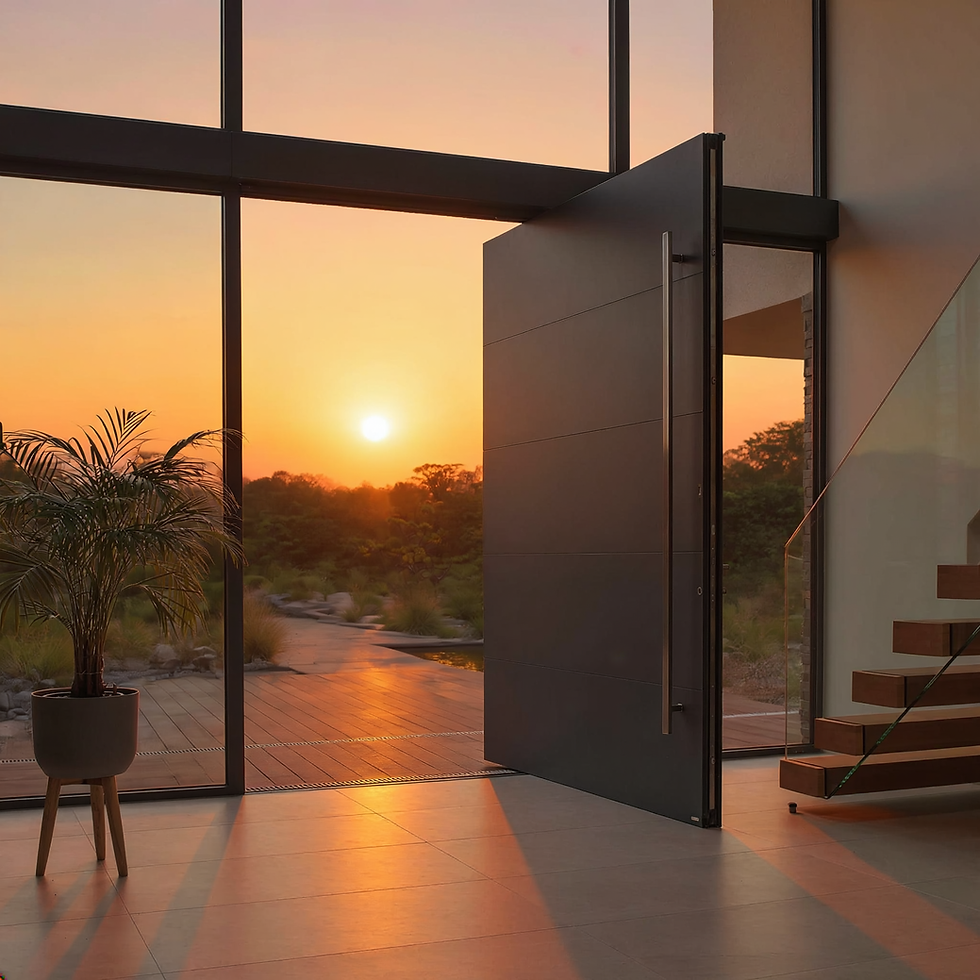
Automatic entry door systems work best when they are designed into the project from the start. Retrofit is possible, but the result is almost always cleaner, less expensive, and more architecturally integrated when automation is part of the original specification.
Motor Selection Matches the Door
Motor selection and door specification should happen together. A door chosen without considering automation creates constraints. A motor specified without knowing the door creates risk. DAS works with architects and builders at the design stage to ensure both decisions are made in the right order.
Electrical Rough-In During Construction
Automated entry doors run on electricity. Low-voltage wiring and control runs need to be roughed in during framing when walls are open. DAS control boxes include 36-hour battery backup as standard, but primary power needs to reach the motor location. Getting this done during construction is straightforward. Doing it after the fact is not.
Frame and Header Preparation
The motor mounts to the frame or header above the door. The frame needs structural capacity to support the motor housing and the forces generated during operation. For heavy pivot doors especially, this is an engineering conversation that belongs in design development, not during construction administration.
Threshold Design
Automatic entry doors work best with flush or near-flush thresholds. Modern weather sealing technology maintains a proper building envelope without a raised threshold. The specification needs to account for this from the beginning rather than adapting a threshold detail designed for a manual door.
For a broader treatment of what architects and builders should be asking about door automation at the specification stage, the questions architects should ask about automated door systems covers the full set of early-project considerations.
Automatic Entry Doors vs. Smart Locks: A Comparison
Automatic Entry Door | Smart Lock | |
Moves the door | Yes, fully motorized | No, manual operation |
Controls the lock | Yes, with compatible hardware | Yes |
Hands-free entry | Yes, door opens on approach | No, door must be pushed/pulled |
Works with heavy doors | Yes, up to 1,320+ lbs | Handle hardware dependent |
Smart home integration | Full, any platform | Platform-specific |
Installation | Professional, designed-in or retrofit | DIY or professional |
UL 325 certified | Yes (DAS systems) | Not applicable |
Closes automatically | Yes, on a timer or command | Lock only, door stays open |
Best for | True hands-free home entry | Electronic lock control only |
Ready to add an automatic entry door to your home or project? Contact DAS at 425-298-3608 or reach the team through the contact page.
Frequently Asked Questions
What is an automatic entry door for a home?
An automatic entry door is a residential front door equipped with a motorized system that opens and closes the door without manual effort. A motor engages when triggered by a sensor, remote, voice command, smart home scene, or biometric scanner, and the door moves on its own. This is different from a smart lock, which only controls the door's latch or deadbolt and still requires the door to be pushed or pulled open manually.
Can any front door be made automatic?
Yes. Virtually any residential entry door can be automated with the appropriate motor system, including standard swing doors, oversized custom entries, double-swing French door configurations, and architectural pivot doors. Door weight determines motor selection. DAS motor systems handle doors from standard residential weights up through pivot doors weighing over 1,000 pounds, all with UL 325 certified safety systems. The door type affects the motor configuration, not whether automation is possible.
What smart home systems work with automatic entry doors?
DAS automatic entry door systems use open-port architecture, which means they accept a signal from virtually any smart home platform or control device: Amazon Alexa, Google Home, Apple Home, Control4, Crestron, Lutron, Savant, Josh.ai, keypads, key fobs, motion sensors, and biometric scanners. There is no required hub, no proprietary ecosystem, and no platform lock-in. Whatever smart home system the home uses, the entry door integrates with it. For a full breakdown of how specific platforms connect, the smart home integration guide for automated doors covers each one in detail.
What is the difference between an automatic swing door and an automatic pivot door?
A swing entry door rotates on side-mounted hinges and moves in an arc. Automation adds a motor that drives the swing. A pivot entry door rotates on a top-and-bottom axis, enabling much larger panels and more dramatic architectural expressions than hinged hardware can support. Both automate fully. The motor systems and frame requirements differ by configuration. For a complete breakdown of automated pivot doors, including weight capacities and design styles, see the motorized pivot door guide.
Does an automatic entry door need to be built in or can it be added to an existing door?
Both are possible. Retrofit automatic door systems can be added to existing residential entry doors, and the result can work well. Designed-in systems, where automation is specified during construction, consistently produce a cleaner, more architecturally integrated outcome because motor placement, electrical rough-in, frame preparation, and threshold design can all be optimized from the start. For new builds and major renovations, designing in from the beginning is the right approach.
How does an automatic front door open without manual effort?
A motor system mounted at the door frame or integrated into the door assembly drives the door's movement. When an activation trigger fires (motion sensor, voice command, remote, smart home scene, biometric scan, or wall switch), the control box signals the motor to engage. The motor moves the door to the open position, holds it for a programmed interval, and then returns it to closed. Safety sensors detect any obstruction during movement and stop or reverse the door before contact occurs. UL 325 certification requires these safety mechanisms to meet tested standards.
What does an automatic entry door cost?
Automatic entry door system cost varies based on door type, weight, configuration complexity, and control options selected. A standard swing entry system differs in scope from a motorized floor-to-ceiling pivot door in a custom build. The most accurate starting point is a project consultation where door specifications and automation goals are reviewed together. Contact DAS to discuss your specific project and get a clear picture of what the system involves.
What other doors in a home can be automated?
DAS automates the full range of residential door configurations. Patio sliding doors, multi-slide glass wall systems, lift-and-slide doors, and folding panel systems all use the same open-port control architecture and integrate with the same smart home platforms. The complete guide to automatic patio doors covers patio and sliding door automation in detail. The DAS project portfolio shows completed installations across door types and scales throughout the Pacific Northwest and Mountain West.
Your Smart Home Should Start at the Front Door
Door Automation Systems installs automatic entry door systems for residential and commercial projects. UL 325 certified motor systems for swing doors, pivot doors, and any custom entry configuration. Open-port architecture that connects to any smart home platform without proprietary lock-in. Designed-in specifications that coordinate with your architect, builder, and smart home integrator from day one.
Contact the DAS team or call 425-298-3608 to talk through your project.